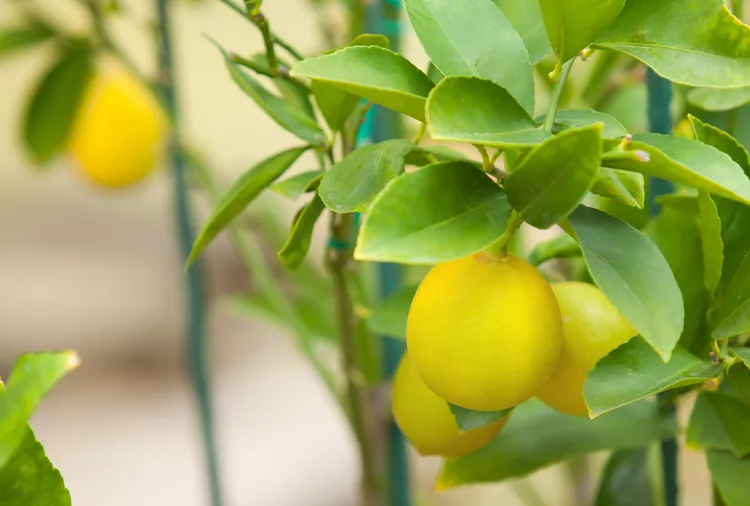
The only place you want to see yellow on a lemon tree is on the fruit. If your lemon tree’s leaves are turning yellow, it’s a sign the plant has problems. It’s essential to identify the cause and fix it as soon as possible so your tree stays healthy enough to produce lemons. Yellowing leaves are usually a sign of nutritional deficiencies or watering errors, but other issues can also cause problems. Learn how to troubleshoot the top 8 reasons for those yellowing leaves and how to get the green back in your tree.
1. Too Much Water
Like all plants, lemon trees need the right amount of water to thrive. Overwater a lemon tree, and you might cause root rot, a disease that makes the tree unable to take in nutrients and air through its roots. The tree is drowning and starving, causing the leaves to turn yellow.
Heavy or clay soil can hasten root rot because it holds water on the roots. Be sure your lemon tree is planted in loose, well-drained soil and not in a low spot where water pools. If your lemon tree is in the ground and overwatered, let the soil dry out completely. Then, water less often. If the lemon tree is in clay or compacted soil, add compost to loosen the soil and help it drain faster.
If you grow your lemon tree in a container, the pot should have drainage holes in the bottom and be filled with a loose, well-draining potting soil. Commercial potting mixes formulated for citrus plants are ideal. If your lemon tree is overwatered, remove it from its container and replace the sodden soil with fresh, loose, dry potting medium.
2. Too Little Water
Giving a lemon tree too little water causes its leaves to turn yellow, dehydrate, and die. Lemon trees are especially thirsty, needing more water than most citrus trees.
The amount of water your lemon tree needs and the frequency of watering depend on the air temperature, the age and sizes of the lemon tree, and whether it’s planted in the ground or a container. For a newly planted tree, you may need to water every few days for the first few months until the tree is established. For mature trees, you can water as little as once a week. To figure out when your lemon tree needs water, poke your finger into the soil beneath the tree. If the top 2 inches are dry, it's time to water. Ideally, you should let the top few inches of soil dry out in between waterings.
A soil moisture meter can help you water your lemon tree correctly. The soil should be moist 8 to 12 inches below the surface. If your meter tells you only the top couple of inches of soil are wet, you need to water longer and more deeply. Once you know how often your lemon tree needs watering, establish a regular schedule and stick to it.
Watering slowly over a longer period of time is better than adding a lot of water over a short amount of time because it gives water time to soak down into the soil rather than run off.
3. Lack of Nutrients
Like all plants, lemons need good nutrition to be healthy. Yellow leaves may be a sign a lemon tree is lacking vital nutrients, which causes a condition called chlorosis. You can correct most nutrient problems with a balanced fertilizer formulated for citrus plants.
Lemon trees are heavy feeders; you must fertilize them often to keep them healthy. Give lemon trees planted in the ground nitrogen fertilizer in late winter before they bloom. Fertilize again in spring after they bloom and a third time in summer after you pick the lemons. For lemon trees grown in containers, apply a small amount of nitrogen fertilizer at regular intervals throughout the year.
To zero in on the type of nutrient problem plaguing your lemon tree, take a close look at the yellowing leaves to determine which nutrient your plant may be lacking. Here are the types of nutrient deficiencies that cause yellow leaves and how to spot the problem:
- Nitrogen: Old leaves turn yellow first, and then the younger leaves turn yellow. Correct this by adding nitrogen-rich compost or aged cow manure to the soil around the base of the lemon tree.
- Zinc: Leaves are stunted and yellow, but the veins are still green. Spray the leaves with a foliar fertilizer like liquid sea kelp or add zinc sulfate to the soil.
- Iron: The lemon tree’s old leaves are yellow, and the new leaves are stunted. The leaves might fall off. Apply a citrus fertilizer that includes iron.
- Magnesium: Old leaves develop yellow-green blotches in a V-shape that enlarge until the entire leaf turns yellow and falls off. It’s a condition called bronzing. Add magnesium sulfate (Epsom salt) to the soil.
- Manganese: Yellow spots appear on new leaves and spread to older ones. Leaves look dry but are not stunted. Add manganese fertilizer to the soil around the lemon tree.
An at-home soil testing kit can precisely identify what’s missing in your lemon tree’s soil so you can correct the problem.
4. Soil pH Problems
Lemon trees prefer a soil pH of 5.5 to 6.5. Alkaline soil with a higher pH or acidic soil with a lower pH can cause lemon tree leaves to turn yellow. Do an at-home soil pH test to see if your soil is in the optimal range for your lemon tree. If it’s higher than 7.0, use a commercially prepared soil acidifier to lower the pH quickly. If it’s lower than 5, mix lime or dolomite into the soil to raise the pH.
If your lemon tree grows in a container, repot it with fresh potting medium formulated for citrus trees. The beauty of container gardening is you have a lot more control over the soil. If it’s less than ideal, toss it and replace it with better soil.
5. Pests
If the leaves on your lemon tree turn yellow in clusters, you might have an invasion of sap-sucking insects. Spider mites, scale insects, and mealybugs are just a few of the pests that can steal the life from your lemon tree and cause leaves to turn yellow and fall off. If you see signs of pests, treat the plant immediately with insecticidal soap. When the bugs are left untreated, the leaves fall off the plant. While lemon trees planted in the ground are also prone to insect invasions, they’re not as vulnerable as potted lemon trees.
6. Not Enough Sun
If your lemon tree’s leaves are yellowing and falling off, the tree may not be getting enough sunlight. Lemon trees are sun worshippers that need eight hours of full sun daily to thrive. If your lemon tree is in the ground and getting too much shade, your options for giving it more sun are limited. If the tree is immature, dig it up and move it to a sunnier spot. If it’s too big to move, trim the trees blocking its light. If your lemon tree is in a container, move it to a sunnier spot.
7. Cold Temperatures
Lemon trees hail from tropical and subtropical climates, so a couple of days of below-freezing temperatures can damage the leaves, causing them to turn yellow and fall off. Lemon trees are less cold-tolerant than most other citrus trees, so they are damaged if left outdoors when it freezes. If your lemon tree is in a container, bring it inside on cold nights to keep it warm. You can overwinter it for months indoors. If the lemon tree is outdoors in the ground, wrap it in a frost cloth or blanket and hope for the best.
8. Natural Leaf Shedding
If a few leaves on your lemon tree are yellow but there is still healthy, green, new growth, your tree may just be naturally shedding its older leaves. Don’t panic. Old leaves drop off to free up the tree’s energy to grow new ones. You don’t need to do anything; the lemon tree is fine.
Leaves are likely to turn yellow and fall off a potted lemon tree when you move it to a new spot, such as when you take the tree outside in the spring or bring it inside for the winter. The change in light from those seasonal rotations stresses the tree for a short period. Don’t worry; this leaf drop is natural. Just keep feeding and watering the lemon tree as usual, and it will transition to its new conditions.