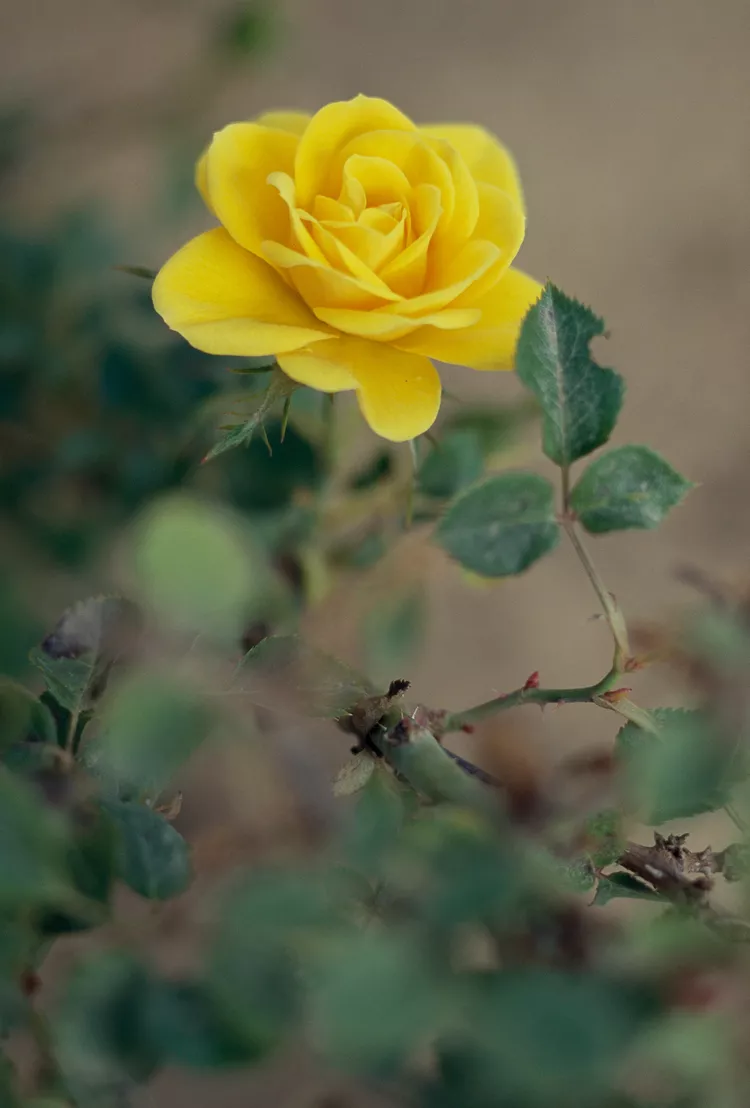
Gardeners with limited space can grow roses by cultivating miniature roses in containers, but they grow just as well in a garden bed. Miniature roses emerged in the 1930s as an accidental result of rose hybridizing. These perennials usually stay under 2 feet tall and respond to all the care basics of regular-size roses—deep irrigation, sunshine, and regular fertilizing. Some miniature roses have the standard upright form of many of their standard-size relatives but come in climbing and cascading varieties. In addition to being beautiful and fragrant, they have no thorns and are robust rebloomers.
Miniature roses are incredibly hardy but need extra winter protection in cold climates. In Zone 5 and colder, bury the plant in a mound of soil to prevent it from dying back to the roots.
Miniature rose Overview
| Genus Name | Rosa |
| Common Name | Miniature rose |
| Plant Type | Rose |
| Light | Part Sun, Sun |
| Height | 1 to 3 feet |
| Width | 1 to 2 feet |
| Flower Color | Blue, Green, Orange, Pink, Red, White |
| Foliage Color | Chartreuse/Gold |
| Season Features | Fall Bloom, Spring Bloom, Summer Bloom |
| Special Features | Cut Flowers, Fragrance, Good for Containers, Low Maintenance |
| Zones | 10, 11, 4, 5, 6, 7, 8, 9 |
| Propagation | Stem Cuttings |
Where to Plant Miniature Roses
Plant miniature roses outdoors in Zones 4-11. In colder areas, they can be grown in containers indoors and then moved outdoors in spring. Select a location that receives 6 to 8 hours of sun a day. They can tolerate partial sun but won't bloom as profusely. These plants need rich, loamy, and well-drained soil to be their best.
Miniature roses adapt well to flowerbed edging, front-of-the-border socializing with perennials and annuals, and low hedges. Their small size makes them good additions to rock gardens, tight spaces like small borders and along fences, and as container plants on porches and patios. Because of their many hues, they can work with any garden color scheme.
How and When to Plant Miniature Roses
Plant miniature rose bushes much like you would plant full-size rose bushes. Dig a hole the same height as the pot it came in and about a foot wider. After removing the plant, loosen the roots. Spread out the roots on top of the soil that you've enhanced with organic matter. Add mulch after watering. Space several plants 12 to 24 inches apart, depending on variety.
Like bigger roses, miniature roses do best if planted in spring.
Miniature Roses Care Tips
Miniature roses aren't fussy and require the essentials: sunlight, water, and well-draining soil.
Light
Miniature roses do best in full sun at least six to eight hours per day. Too much shade can cause them to become sparse. In addition, lots of sun helps with disease resistance.
Soil and Water
The best soil for miniature roses is loamy, rich, and well-drained. If you plant them in containers, use light, nutrient-packed soil that drains well to avoid root rot. Water deeply and add water when the soil is dry, about 1 inch per week. Potted miniature roses, especially those grown indoors, need more water than in the garden.
When watering miniature roses, aim the hose or watering can at the base of the plant to avoid getting the leaves and blooms wet.
Temperature and Humidity
Moderate temperatures are the best environment for miniature roses—they do best when it's around 70ºF. If it's going to be below freezing, bring any potted plants indoors to protect them from the cold. You can also protect plants in your garden by adding additional soil to the base of the plants and topping it with mulch.
Fertilizer
Roses need plenty of fertilizing to bloom throughout the season. A commercial rose food or all-purpose product is fine. Begin fertilizing in spring when the first leaves appear, then repeat after each abundant bloom. Consult product label instructions to determine the correct amount to use. Stop feeding your plants six to eight weeks before the first frost.
Pruning
Prune roses in late winter or early spring before new blooms appear. Cut away any dead wood and trim back around one-third of the plant to maintain its shape and encourage growth. Deadhead roses weekly to promote new growth during the season.
Potting and Repotting Miniature Roses
To pot miniature roses, use a container 6 to 8 inches deep with drainage holes. It helps to add gravel to the bottom of the pot to facilitate drainage. Use potting soil with good nutrients that promotes drainage. Keep indoor potted miniature roses where they'll get plenty of sunlight for most of the day, or they won't thrive. Also, they may need some additional humidity to stay healthy.
Pests and Problems
Keep fungal diseases like powdery mildew from infecting your miniature roses by ensuring good airflow around your plants and always watering them at the base and not from overhead. If you see signs of infestation by insects like Japanese beetles or mites, quickly spray your plants with a blast of water or insecticidal soap. If pests persist, try a chemical insecticide to minimize the damage.
How to Propagate Miniature Roses
Cuttings are the way to propagate miniature roses. Plant healthy cuttings in a mix of moist soil and perlite after snipping the base for better water absorption. Don't overwater the cutting or the soil—just mist it. Set a plastic bag over the top of the cutting, but don't let it touch the cutting. Keep it indoors in a bright area without direct sunlight; after a month or two, check that the stem has grown roots by gently tugging it to see if there's resistance. When that happens, remove the plastic bag. Once the stem is growing leaves, you can pot it or transplant it to your garden.
Types of Miniature Roses
'Amy Grant' Rose
Rosa 'Amy Grant' bears light pink blooms in a classic hybrid tea form poised on glossy, disease-resistant foliage. The plant grows 2 feet tall and wide. Zones 5-9
'Baby Boomer' Rose
Rosa 'Baby Boomer' offers gorgeous, baby-pink blooms atop long stems, so they're perfect cut flowers. The foliage is glossy and dark green. Plants grow 2 feet tall and wide. Zones 5-10
'Baby Love' Rose
Rosa 'Baby Love' usually outperforms all other roses, large and small. Single buttercup-colored blooms continually smother the upright plant. The bright green foliage is exceptionally disease-resistant. Plants grow 3 feet tall. Zones 5-9
'Black Jade' Rose
Rosa 'Black Jade' features midnight-red, almost black buds that unfurl into velvety red flowers. The plant grows 2 feet tall and wide. Zones 4-10
'Carrot Top' Rose
Rosa 'Carrot Top' bears double-petal, sizzling orange flowers. The rounded plants grow 12-16 inches high. Zones 5-9
'Dancing Flame' Rose
Rosa 'Dancing Flame' features cerise-pink edging on yellow petals. An abundant bloomer, it also has glossy, disease-resistant foliage. It grows to 2 feet tall and wide. Zones 5-9
'Gourmet Popcorn' Rose
Rosa 'Gourmet Popcorn' produces cascading clusters of fragrant snowy-white flowers on a disease-resistant plant all season. It grows 2 feet tall. Zones 5-9
'Little Artist' Rose
Rosa 'Little Artist' shows off semidouble ruffled blooms that open to reveal a splashy color scheme of scarlet petals with large white centers. It blooms profusely and grows 16 inches tall. Zones 5-9
'Magic Carousel' Rose
Rosa 'Magic Carousel' offers rounded petals edged in red that frame snow-white centers. The vigorous plants grow 18 inches tall and wide. Zones 5-11
'Rainbow's End' Rose
Rosa 'Rainbow's End' blooms feature lemon-yellow petals highlighted by scarlet edging. The colors stay true when grown indoors or outdoors. It grows 22 inches high and wide. Zones 4-11
'Sun Sprinkles' Rose
Rosa 'Sun Sprinkles' is an award winner with perfectly formed, deep yellow blooms and a spicy scent. This variety features generous flowering and glossy, dark green foliage. It grows to 2 feet tall. Zones 5-9
Miniature Rose Companion Plants
Heliotrope
This sweet-scented flower with purple or blue blooms is equally at home in a garden bed or a container. Heliotrope is covered in blooms during the summer and is particularly fragrant when planted in groups to maximize its subtle fragrance. Zones 10–11
Lantana
Lantana is a low-maintenance, sun-loving flower with small buds that attract butterflies, bees, and hummingbirds. It comes in a range of colors. When grown as an annual, it reaches 3 feet tall. Zones 8–11
Verbena
Verbena blooms in cool spring weather before most of the other plants in the garden. The flower stalks bloom all season and continue to grow and produce new buds. Verbena also grows well in containers.